
There comes a point when clothes that have served us well for years no longer fit quite the same way. A favorite pair of trousers feels tight around the waist. A tailored jacket becomes restrictive across the shoulders. A dress that once fell beautifully no longer sits as it should.
Our first response is often to buy the next size up. We may turn to stretch fabrics or continue wearing familiar styles because they have always worked for us.
However, body shape changes do not always require a different clothing size. Sometimes our proportions have shifted. The cuts and silhouettes we have relied on for years may no longer be suitable.
The situation becomes more complicated when we are working on improving our fitness. Should we buy new clothes now, alter what we own or wait until our measurements stabilize?
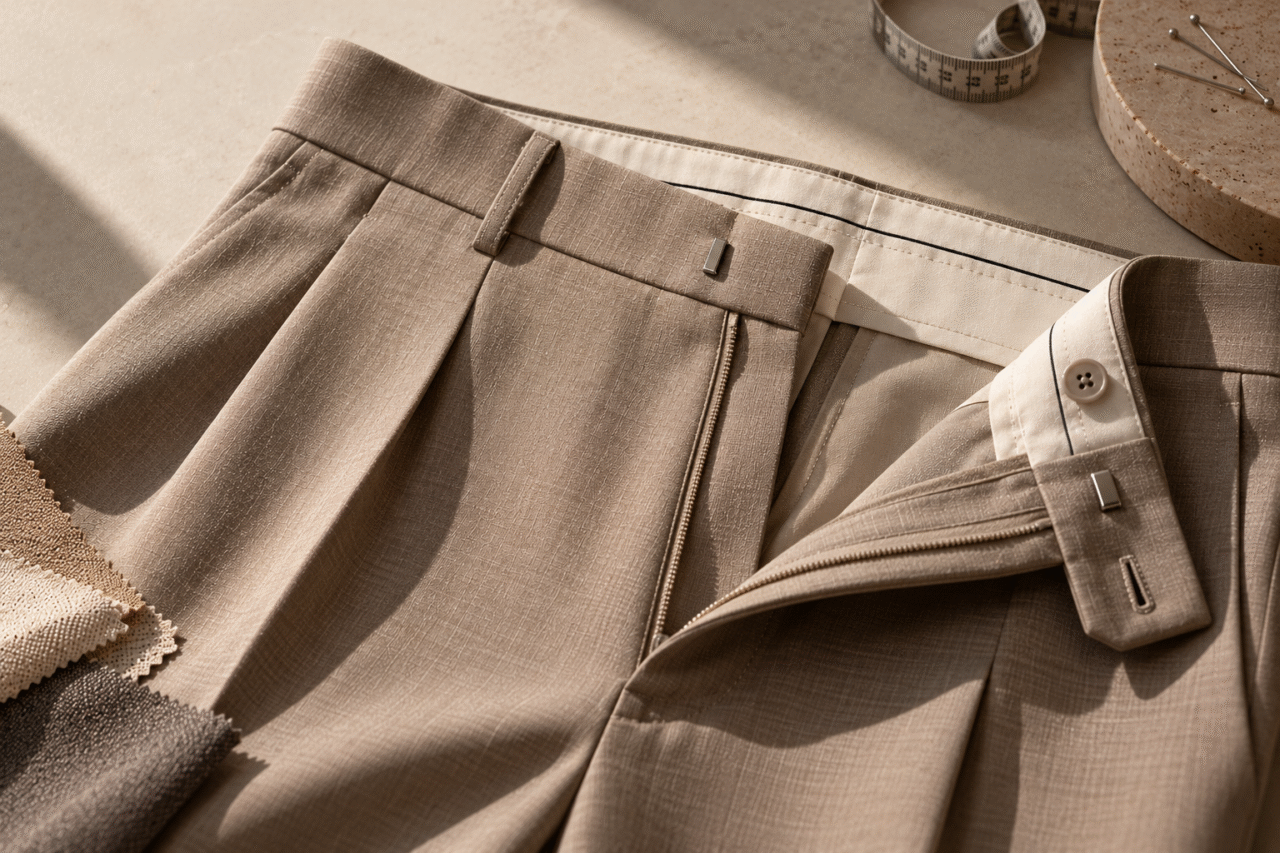
At Image & Me, we approach this as a wardrobe strategy question. The aim is to make your wardrobe work for your present needs while allowing flexibility for future changes.
When your body shape changes, start by reviewing what still fits and what no longer works. Keep the pieces you wear comfortably. Alter garments where adjustments make sense, and replace essentials that no longer fit. If your measurements are still changing, set aside selected pieces you may want to wear again.
Why Your Wardrobe May No Longer Meet Your Needs
Body shape changes at different stages of life, sometimes so gradually that we continue wearing familiar clothes without reconsidering the fit.
For both men and women, changes in physical activity, body composition and muscle mass can affect how clothing sits. Someone who spends more time traveling or working at a desk may notice changes around the waist. On the other hand, returning to strength training can lead to broader shoulders or more muscular thighs.
There are also changes associated with particular life stages. Women may experience shifts in body proportions during pregnancy, after childbirth and through perimenopause or menopause. For women experiencing perimenopause, changes in body proportions can become particularly noticeable. As explained by Menopause.sg, hormonal fluctuations and ageing can influence where the body stores fat, particularly around the abdomen. This may mean that familiar trouser cuts, fitted dresses and waist-defined silhouettes no longer feel or fit quite the same way.
For men, midlife changes in muscle mass and fat distribution can affect jacket and trouser fit. A jacket may still fit across the shoulders but feel tight around the abdomen. Trousers may become uncomfortable around the waist, seat or thighs.
Weight loss, recovery from illness or surgery, and changes in mobility can also affect clothing fit. Importantly, body weight and body shape are not necessarily the same thing. Your proportions may change even when your weight remains relatively stable.
The wardrobe you built five or ten years ago may therefore need reassessment. Your personal taste may be unchanged, but the fit of your clothes could be quite different.
Recognizing When Your Clothes No Longer Fit Properly
The signs are often practical and easy to overlook.
For men, a shirt may button comfortably while standing but pull across the abdomen when seated. Trousers may feel tight around the thighs despite fitting at the waist. A favorite blazer may no longer sit smoothly across the back. For women, a shift dress may begin pulling across the hips. A previously comfortable waistband may feel restrictive. A jacket may fit across the shoulders but no longer close comfortably over the bust.
Beyond these physical signs, changes in our dressing habits can also reveal fit problems. You may find yourself repeatedly choosing the same few forgiving garments, avoiding fitted clothing or leaving certain pieces unworn because they no longer feel comfortable.
These are useful signs that your wardrobe needs a review. They do not necessarily mean you need to replace everything.
Before Buying Another Size, Reconsider the Silhouette
One common mistake is assuming that moving up or down a size will solve a fit problem.
Consider a man whose waist measurement has increased while his shoulders remain unchanged. A larger jacket may provide more room around the abdomen. However, the shoulders could become too wide and the sleeves too long. A different jacket cut or construction may be a better solution.
Similarly, a woman whose proportions have changed around the waist or hips may struggle with a familiar dress style. Sizing up could create excess fabric around the shoulders and bust. A different waist placement, skirt shape or fabric construction may produce a better fit.
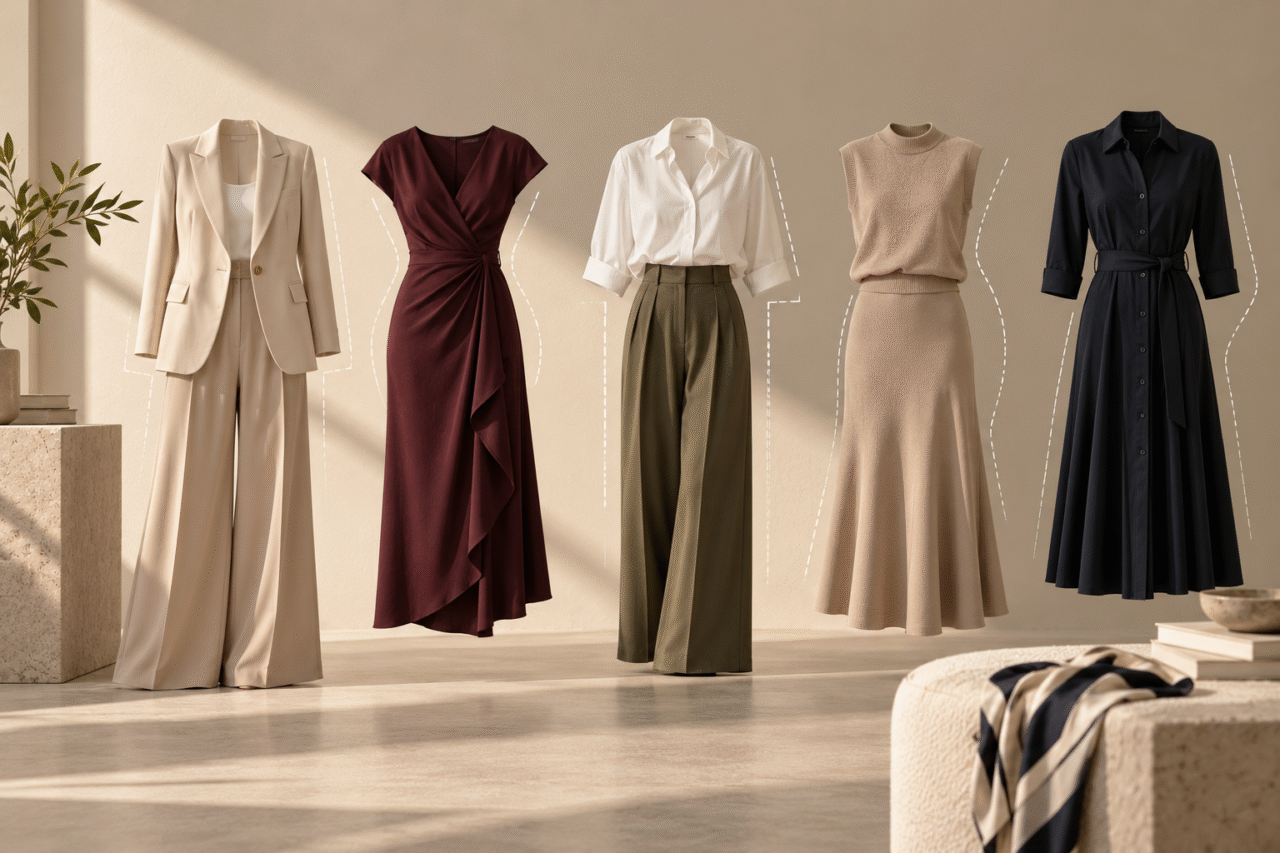
Even when you return to fitness, your body may not return to exactly the same proportions. Strength training can change the relationship between your waist, hips, shoulders and thighs. It is worth reassessing the styles you wear rather than automatically buying the same cuts.
This does not mean abandoning your personal style. You may still prefer tailored, classic or minimalist clothing. However, understanding your current body proportions can help you identify which cuts and silhouettes work best as your body changes.
Keep, Alter, Replace or Set Aside?
You have probably come across some version of this framework when organizing your wardrobe.
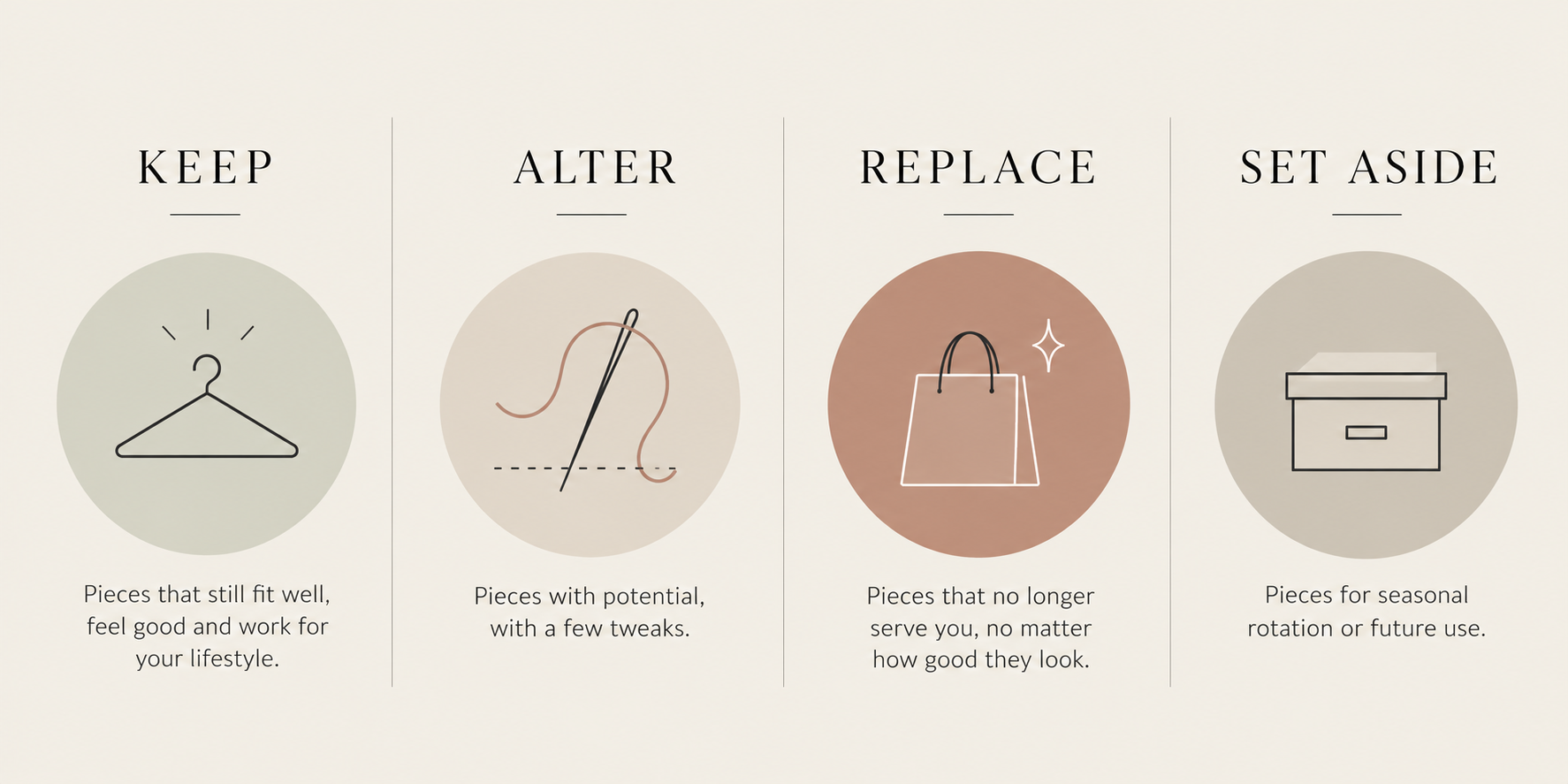
The idea is familiar. However, when your body shape is changing, deciding what belongs in each category requires more thought. This is especially true if you are improving your fitness and expect your measurements to change again.
KEEP — What Still Works for You Today
Start with clothing that fits comfortably and suits your current proportions. It should also meet your lifestyle and professional needs.
Pay attention to how garments fit when you move and sit. Do not judge the fit only while standing in front of a mirror.
A jacket that fits well across the shoulders is worth keeping. So are trousers that sit comfortably at the waist and dresses that fall cleanly over the body.
You may also find that some of your less structured garments have become more useful during this period.
ALTER — What Can Be Adjusted Without Compromising the Garment
Good-quality clothing may be worth altering, especially when the fit issue is relatively minor.
Trouser waistbands, hems, sleeve lengths and certain dress seams can often be adjusted. Much depends on the garment’s construction and available seam allowance.
However, alterations become more complicated when clothing no longer fits across the shoulders, chest, hips or seat. Changing one area can also affect the overall balance of a garment.
Before investing in alterations, consider whether your measurements are likely to change further. It may be sensible to wait before making expensive adjustments to pieces you hope to wear for several years.
REPLACE — What You Need Now and Cannot Comfortably Wear
Some pieces no longer fit and cannot be altered satisfactorily. Others may be unsuitable for your current proportions. In some cases, extensive alterations and the associated costs may simply not be worthwhile.
Start by replacing the garments you depend on most. For a working professional, this might mean two well-fitting trousers, a versatile jacket and a few shirts or blouses. It could also include a dress suitable for business meetings.
You do not need to replace everything immediately. Choose pieces that work together, and look for cuts and fabrics that offer some flexibility without appearing oversized or losing their structure.
SET ASIDE — What May Work Again Later
If you are rebuilding your fitness or experiencing a temporary change in measurements, you may have good reasons to retain certain pieces.
Set aside quality garments that you genuinely enjoy wearing. This is particularly worthwhile for items that would be expensive or difficult to replace. Store them separately so they do not interfere with your everyday wardrobe decisions.
Be selective, though. Clothing that was already uncomfortable or unsuitable before your body changed may not become more useful simply because it fits again.
The purpose of this exercise is to make your wardrobe functional today while allowing some flexibility for changes in the months ahead.
Building a Transitional Wardrobe
If you are working towards improving your fitness, it may not make sense to rebuild your entire wardrobe immediately.
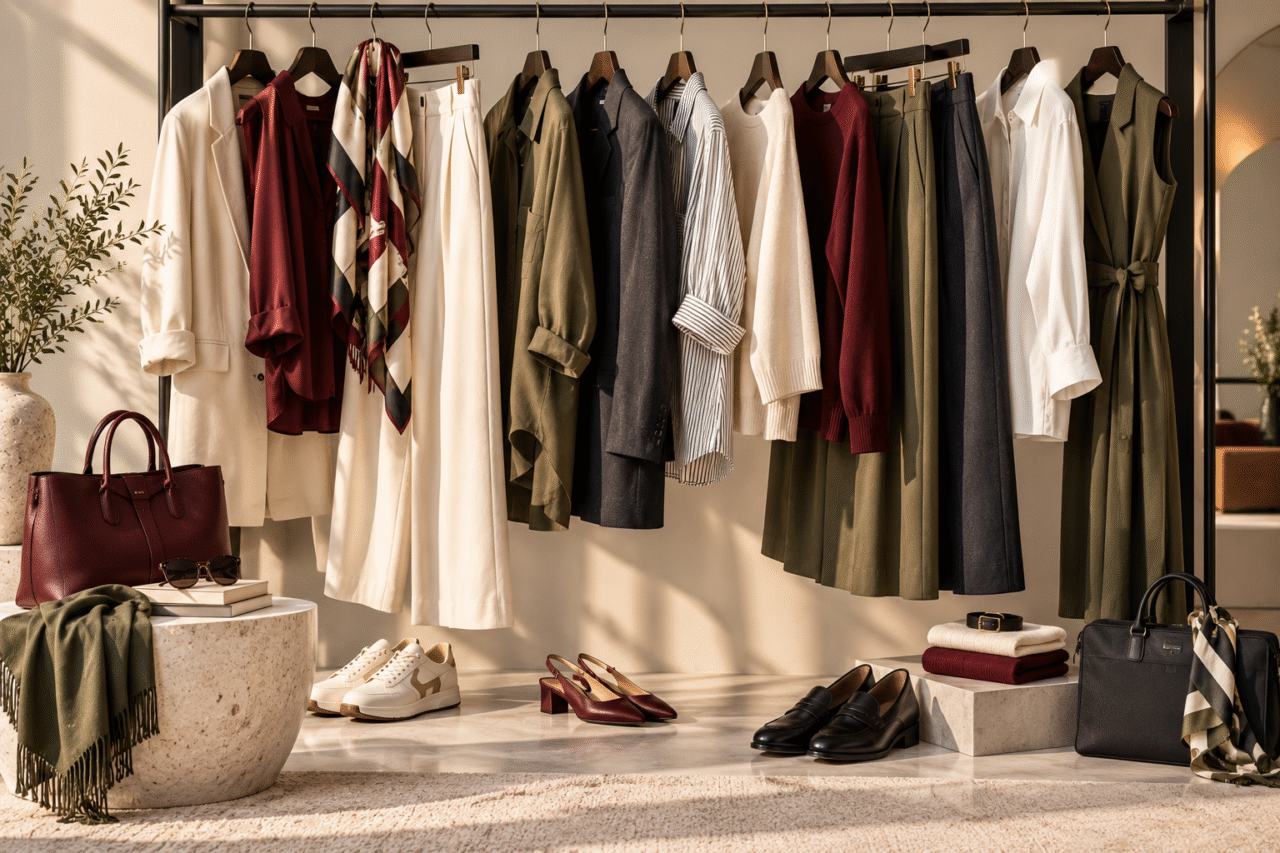
Instead, consider buying a smaller collection of well-fitting clothes. These should support your current professional and social commitments.
Think about the occasions you actually need to dress for. If you regularly attend business meetings, client dinners or formal events, prioritise those outfits. Avoid buying large quantities of casual clothing simply because they are easier to fit.
For men, this might mean trousers with more room through the seat and thigh, shirts with enough ease through the torso and jackets that accommodate current proportions without appearing oversized.
For women, a well-cut straight or gently A-line dress may offer flexibility. Tailored separates, considered draping and adjustable waist details can also be useful. The right choices depend on where your proportions have changed.
Fabric matters too. A small amount of stretch can improve comfort and movement, particularly in trousers and fitted dresses. However, stretch cannot compensate for poor construction or an unsuitable cut.
In Singapore’s climate, lightweight and breathable fabrics remain important. Your clothing should be comfortable during long working days and travel. It also needs to work when moving between outdoor heat and air-conditioned environments.
When Your Measurements Stabilize
If you have been working towards a fitness goal, there may come a point when your measurements become relatively stable.
This is a good time to revisit the clothing you set aside. Reassess what can be altered and consider investing in garments that suit your current proportions.
You may discover that some of your previous clothing fits again. You may also find that your body shape or lifestyle has changed enough to make those familiar styles less suitable.
For example, a man who has developed more muscular thighs may need a different trouser cut. This can be true even after returning to his previous waist measurement.
A woman whose proportions have changed after pregnancy or menopause may prefer a different dress silhouette. She can still retain the same overall personal style.
This is also an opportunity to review your wardrobe in relation to your current lifestyle. The clothing you relied on earlier in your career may no longer reflect your role, daily activities or preferences.
Rather than rebuilding everything at once, invest gradually in pieces that offer the greatest versatility and wear.
A Wardrobe That Works for Where You Are Now
A wardrobe built over many years will naturally need to evolve as your body, lifestyle and professional needs change.
Reviewing what still works, what can be altered and what deserves replacing allows you to make considered decisions without unnecessary spending.
Whether you are rebuilding fitness or adjusting to longer-term changes in body shape, the aim is to have clothing that fits comfortably, supports your daily needs and reflects your personal style.
At Image & Me, our Wardrobe Stylist Services help clients understand their current proportions. We review garment fit and guide more considered decisions about what to keep, alter or replace.
Image & Me has worked with senior professionals in Singapore since 2006, helping clients build wardrobes that reflect their roles, lifestyles and individual style.
Frequently Asked Questions
What should I do when my clothes no longer fit properly?
Start by identifying whether the problem is the garment’s size, cut or proportions. Not every fit issue requires buying a larger size. Review what can be kept, altered or replaced before making new purchases.
Should I buy new clothes while trying to lose weight?
Have enough well-fitting clothing to meet your current needs, particularly for work and important occasions. Avoid replacing your entire wardrobe if you expect your measurements to change further.
Can alterations help when my body shape changes?
Yes. Simple alterations can help with waistbands, hems, sleeves and certain seams. However, major changes to the shoulders, chest or garment structure may be expensive or impractical.
How do I know which clothing styles suit my changing body shape?
Start with your current proportions rather than your previous clothing size. Assess garment construction, silhouette and how clothing fits when you move. You may need a different trouser rise, jacket cut, dress shape or garment length.