
For C-suite leaders, black-tie events require two decisions: meeting the dress code, and deciding what above that floor belongs to you. There was a time when a black tie dress code for senior executives left very little room for interpretation. For men, the formula was clearly defined: dinner jacket, formal white shirt, black bow tie, evening trousers and formal black shoes. For women, a formal evening gown was the expected response.
Those conventions haven’t disappeared. In fact, a very specific dress code on an invitation is useful because it tells you the level of formality the host expects. What has changed is how rigidly we feel we need to follow every element of it.
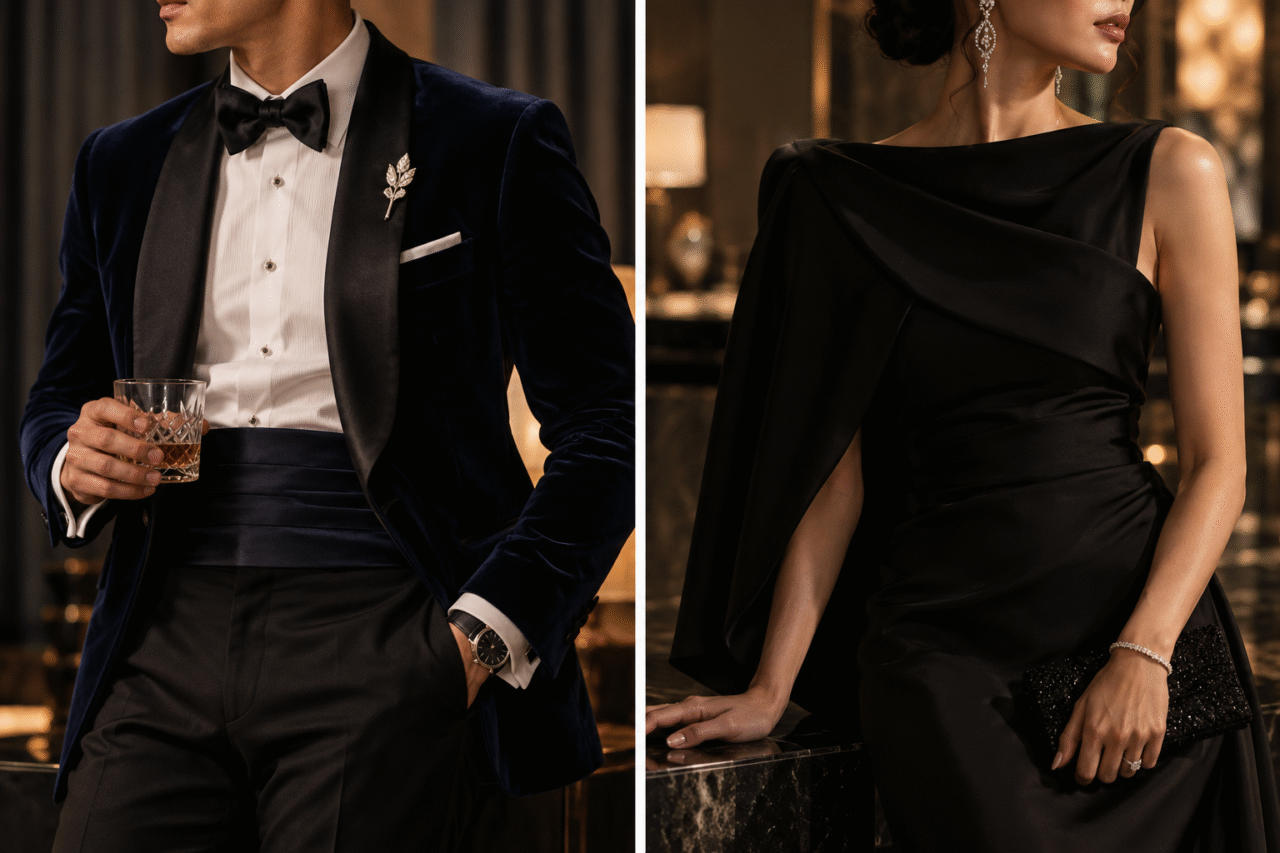
This is a conversation that comes up often with our clients at Image & Me, particularly senior professionals who attend galas, awards evenings, charity dinners and formal events both in Singapore and internationally. They want to respect the occasion, but they don’t necessarily want to arrive looking exactly like everybody else in the room.
And that is where understanding the difference between essential and personalised becomes useful.
The dress code sets the floor. Everything above that floor is where your personal brand either shows up or disappears.
Reading the Room: What the Black Tie Dress Code Actually Requires
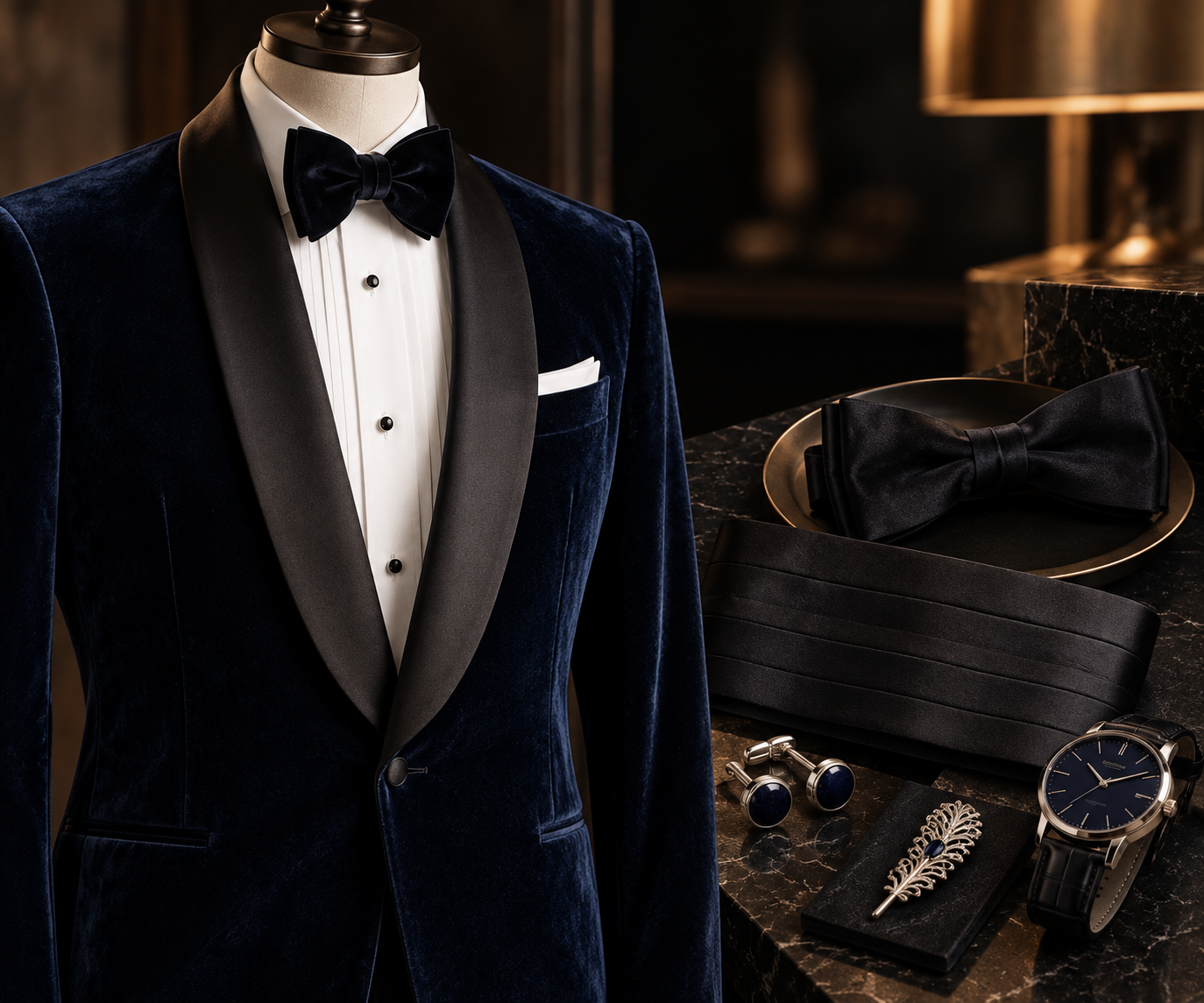
A black-tie invitation still carries meaning. Traditional black tie for men remains centred on the dinner jacket, formal trousers, white evening shirt, black bow tie and formal shoes.
The problem is that we increasingly see two extremes.
Some follow the code so literally that every element is technically correct, but little of their personality comes through.
Others see today’s more relaxed approach to dress codes as permission to underdress. A regular business suit, open-neck shirt and smart shoes may be perfectly stylish elsewhere, but at a formal gala it can look as though the occasion has been misread.
For a C-suite leader, there is another consideration. You are rarely attending simply as a private individual. You may be representing your organisation, meeting clients, sitting with board members or being photographed alongside industry peers. Appropriateness matters, but so does presence.
Our approach is therefore to establish the essential elements first, and then decide where there is room to personalise.
For men, the smallest detail can become the signature
Men sometimes assume that formal eveningwear gives them very little opportunity to express personal style. In reality, the narrowness of the dress code can make a small personal detail much more noticeable.
We have clients who prefer to skip the bow tie. Omitting the bow tie is a departure from traditional black tie. We would consider it only where the host and occasion allow a more relaxed interpretation. Another has made the cummerbund something of a signature. Others are comfortable introducing a discreet brooch, an interesting watch, unusual cufflinks or another detail that has personal significance.
What makes these choices work is that they are deliberate.
If you remove the bow tie, the rest of the outfit needs enough polish and formality for the omission to feel intentional. If you introduce colour, texture or jewellery, it needs to sit comfortably within the overall level of the event.
A cummerbund is particularly interesting because it already belongs to traditional black tie. Its original role is functional as well as decorative: worn with a single-breasted dinner jacket, it covers the waistband and creates a clean transition between shirt and trousers.
That gives someone who enjoys wearing one an opportunity to make it his own. It might be a particular silk texture, a subtle jacquard, a deep evening colour or perhaps even a fabric with cultural or personal meaning. Over time, something as simple as this can become recognisable.
That is when an accessory stops being an accessory and starts becoming part of someone’s visual identity.
Personalisation doesn’t have to mean decoration
One of the easiest ways to introduce personality into men’s evening dressing is through the clothes themselves.
A midnight-blue dinner jacket instead of black, velvet instead of the expected wool, a beautifully proportioned shawl collar, an unusual shirt treatment or an elegant evening slipper can be enough.
This is why Glen Powell’s midnight-blue velvet evening look at the 2026 Golden Globes is a useful reference. The interest comes primarily from colour and texture. The overall language remains unmistakably formal.
For a conservative dresser, the difference could be almost imperceptible from across the room. For someone who travels frequently and is comfortable with the more expressive evening dressing seen in London, Milan, Paris or New York, there may be room to take that idea further.
The principle remains the same: understand how far the occasion allows you to go before deciding how far you want to go.
Choose something with a story
This is perhaps the part of evening dressing we find most interesting.
A signature detail becomes far more compelling when there is a reason you wear it.
A brooch might have been inherited. Cufflinks may have been made from something meaningful. A watch could mark the year a business was founded or an important personal milestone. A scarf or textile might connect to someone’s heritage or travels.
For someone more conservative, particularly in an Asian business environment, a beautiful watch or pair of cufflinks may be enough. Someone who spends considerable time internationally may be comfortable taking that further with a brooch, scarf, distinctive cummerbund or an unusual piece of jewellery.
The value of these details goes beyond how they look. At dinners and receptions, people notice them and ask about them. A small object with a story can become a very natural conversation starter.
At this level, a signature detail should do more than attract attention. It should give you something to say when someone notices it.
Women have more choice — which can make the decision harder
Women’s evening dress codes have always allowed considerably more interpretation than men’s. Length, silhouette, colour, fabric, jewellery and accessories can all change the level of formality.
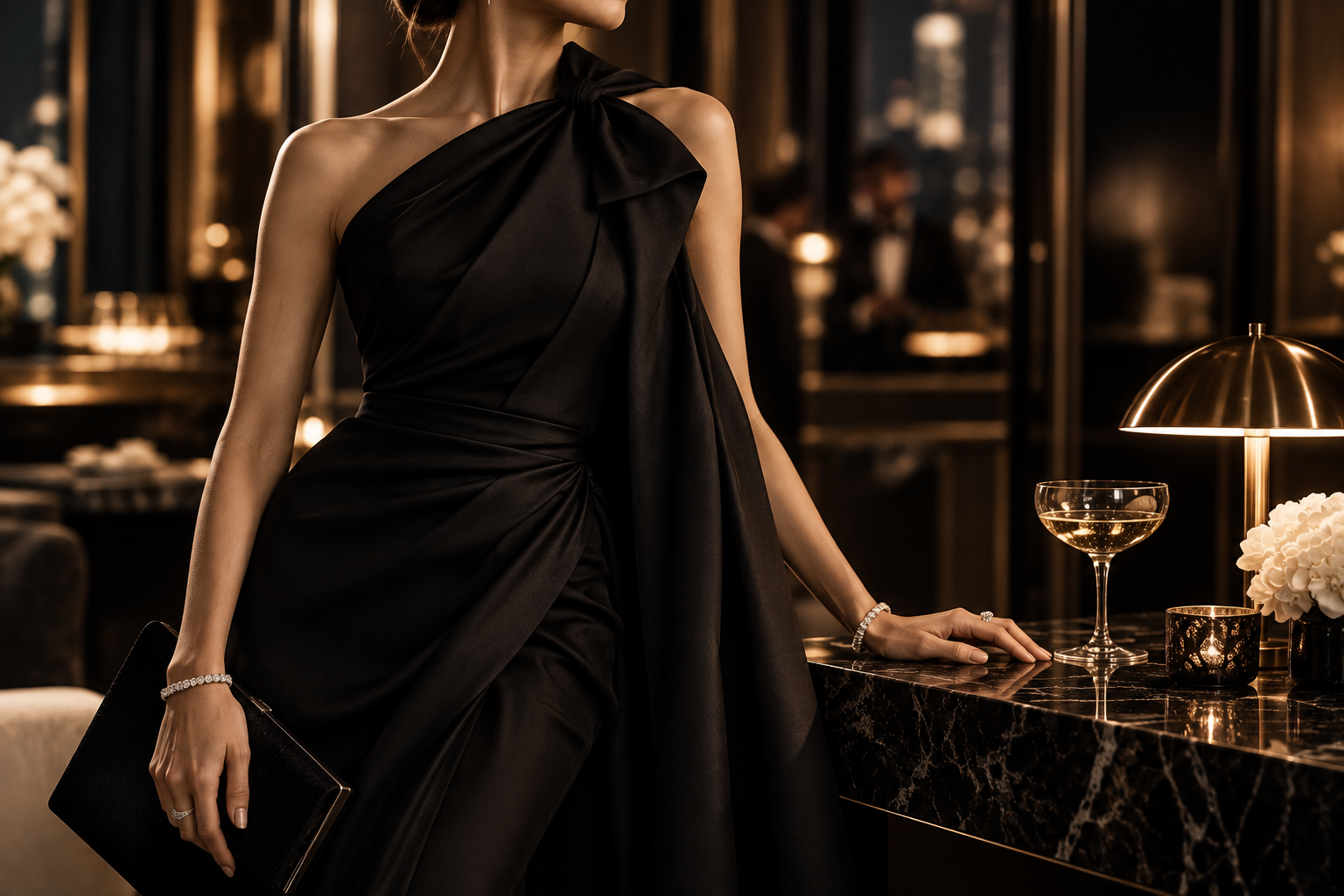
That freedom is useful, but it also means that “evening wear” can cover an enormous range.
For a senior female executive representing her business at a high-profile event, we would first look at the room she is walking into. Is this a cocktail reception, an awards dinner or a full black-tie gala? Who is hosting? Where is it being held? Will there be media? Is she attending personally, or representing the organisation?
Once that is established, personal style can come through in a much more considered way.
Three recent looks demonstrate very different approaches.
Gemma Chan: interest through texture
Gemma Chan’s Calvin Klein look is a good reference for the executive who gravitates towards sophisticated simplicity. This example is a reference for texture and simplicity in cocktail dressing; for a black-tie gala, translate the idea into a more formal evening silhouette.
The silhouette itself is restrained. What gives the dress character is the material and texture. Chan herself described being drawn to the combination of an unexpected texture with a very simple, clean silhouette.
That is a useful approach to cocktail dressing because it doesn’t rely on excessive embellishment or an overtly dramatic shape. A woman who prefers minimalist styles can still create visual interest through fabric, construction or surface texture.
For a business cocktail event, this can often be more effective than adding more accessories to an otherwise ordinary dress.
Keri Russell: edge through material
Keri Russell’s custom Khaite dress at the 2026 Emmys takes the idea further.
From the front, the long black silhouette is controlled and minimal. The unexpected element is that the gown is made from leather, with the open back providing another point of difference. Russell herself spoke about liking the edge that the leather brought to the dress.
For a C-suite wardrobe, the takeaway isn’t that everyone needs a leather evening gown. It is the idea that one unexpected material can completely change the character of a familiar silhouette.
Someone with an edgier personal style doesn’t need to abandon elegance when the invitation becomes formal. She simply needs to find the right place for that edge to appear.
Jennifer Lopez: structure over softness
The Jennifer Lopez look gives us another useful styling idea: combining the softness of an evening gown with the authority of a tuxedo-style jacket.
For a corporate audience, we wouldn’t necessarily translate every element of the original outfit literally; the very low neckline, for example, may not be appropriate for many senior executives representing their organisation.
The interesting element is the structure.
A beautifully cut evening jacket over a softer dress changes the posture of the entire look. It can also be particularly useful for women who feel uncomfortable in eveningwear that becomes overly romantic or delicate. Tailoring brings definition without requiring the whole outfit to resemble business wear.
Your signature doesn’t need to announce itself
When we work with senior professionals, we aren’t trying to create a wardrobe that makes people wonder what they are wearing every time they enter a room.
Often the strongest signatures are quieter than that.
Perhaps you nearly always wear a particular shape of jacket. Perhaps there is a colour that appears repeatedly in your evening wardrobe. You may prefer sculptural jewellery, vintage watches, interesting textiles or beautifully made shoes. Over time, repetition creates recognition.
For men, that might become the cummerbund that friends expect to see at formal dinners. For a woman, it might be an architectural neckline, an unusual fabric or a particular approach to jewellery.
The point is to identify something that feels sufficiently natural that you are happy to return to it.
There is also no requirement for that signature to remain static. Someone attending their first major industry gala may want to stay very close to convention. Ten years later, after spending considerable time in international business circles and understanding exactly how these rooms work, they may feel comfortable pushing one element further.
In Singapore and across Asia, formal events often carry additional layers of expectation — the industry, the host organisation, and the cultural mix of the room can all shift where the line sits. Getting that calibration right, and still arriving with a point of view, is where it gets interesting. Importantly, in Singapore plan for both warm arrivals and air-conditioned interiors. Consider breathable evening fabrics, lighter linings and manageable layers. Velvet and leather can create visual impact, but consider the transfer, reception setting and time spent outdoors before choosing them.
Essential first. Personalised second.
When an invitation specifies a dress code, respect it. The host has given you useful information about the room you are entering.
Then look at what remains open to interpretation.
For one person, that might mean exchanging black wool for midnight-blue velvet. For another, a brooch with personal significance. It could be an unusual cummerbund, a beautifully chosen watch, an evening jacket over a gown, an unexpected material or simply a silhouette that has quietly become your own.
For C-suite leaders, particularly those moving between Singapore, Asia and international business environments, the balance is worth getting right. You want to look entirely at ease with the occasion without allowing the dress code to erase your identity.
The code sets the floor. What you choose to do above it is where your signature begins.
Image & Me has worked with senior professionals in Singapore since 2006, helping clients build wardrobes that reflect their roles, lifestyles and individual style.
Frequently Asked Questions
What is the difference between black tie and black tie optional?
Traditional black tie calls for a dinner jacket, formal evening trousers, a white evening shirt, a black bow tie and formal black shoes for men. For women, a floor-length evening gown is the safest choice, particularly for a formal gala or conservative business setting.
Black tie optional means full black tie is welcome, but men may wear a dark formal suit with a shirt and tie. Women can choose a floor-length gown or an elegant cocktail dress, depending on the occasion. For senior executives representing their organisations, following the full black-tie standard is a reliable choice.
What is the difference between a full-length evening gown and a formal cocktail dress?
A full-length evening gown reaches the floor and is the safest choice for a black-tie gala. A formal cocktail dress is shorter—often knee-length or midi—and is suited to cocktail receptions and events specifying cocktail attire.
For awards evenings, follow the dress code on the invitation rather than assuming cocktail attire is sufficient. The distinction is the level of formality the occasion requires, rather than one option being more stylish than the other.
How do C-suite executives personalise formal eveningwear without underdressing?
The approach is to establish the essential elements of the dress code first, then identify where there is room to introduce something personal — a textile, a piece of jewellery, a colour or a silhouette detail. Personalisation that sits within the formality of the occasion reads as signature. Personalisation that undermines it reads as underdressed.
What should senior female executives wear to a black-tie gala in a conservative business context?
A floor-length gown or formal column dress in a structured fabric remains the most reliable choice. For women attending in a professional capacity — representing their organisation or seated with clients — the priority is presence alongside appropriateness. A single strong element, whether colour, textile or jewellery, is enough to create distinction without departing from the expected level of formality.
By Maninder Krishnan, Founder of Image & Me
Preparing for a gala or awards evening? Our personal shopping service helps you interpret the dress code and create a look that feels distinctly yours.