
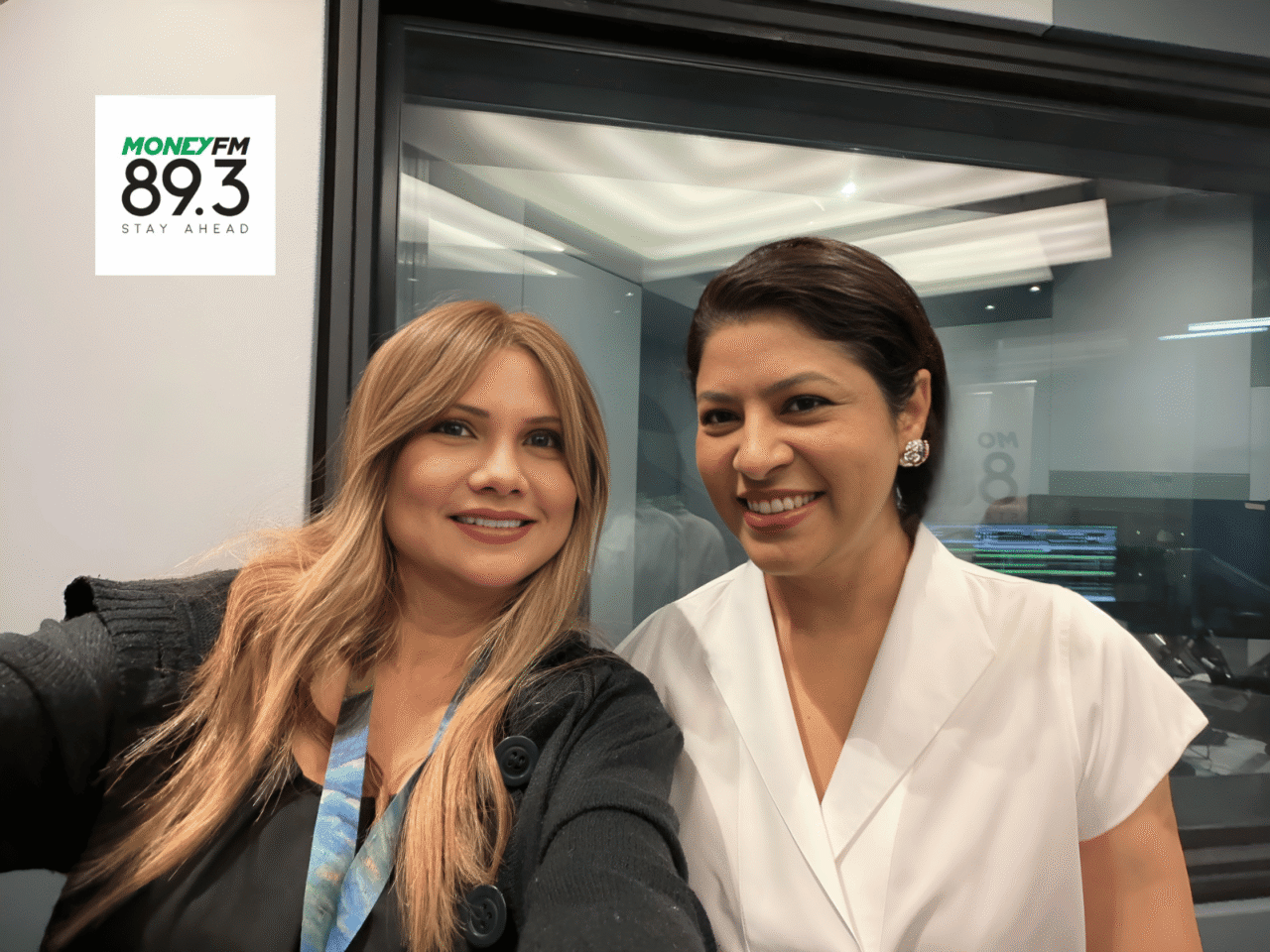
I recently joined Michelle Martin on MONEY FM 89.3’s Live Well with Michelle. We discussed a topic almost every busy professional struggles with: decision fatigue when getting dressed.
Listen to the full interview here
Building a Capsule Wardrobe: The Key Takeaway
If you’re aiming to make your wardrobe effortless and cut down on decision fatigue, it comes down to three steps:
1. Audit your wardrobe to see how much of it is actually functional — what you reach for versus what’s just taking up space.
2. Plan what you actually need to buy, and be clear on the purpose each piece serves.
3. Put it together so the wardrobe tells a story about who you are, not just a random collection of “good” pieces.
Two distinctions that make all the difference
1. A uniform is not the same as a signature look
A uniform — like Steve Jobs’ black turtleneck — is a practical, effortless solution to everyday dressing. It can also become a form of shared identity, which was actually part of Jobs’ original intent when he considered a uniform for his company.
A signature look is different. It’s unique to you. You arrive at it by working out your personal style preferences and the specific details that define “you” — the elements that represent you best. A signature look is identifiable and recognizable as yours. For example, always wearing a certain style of shirt collar, tailored specifically for you — most people who have a true signature look have gone to the effort of getting details like this custom-made.
Both reduce decision fatigue. But a uniform is about efficiency, and a signature look is about identity. Knowing which one you’re building toward changes how you approach your wardrobe.
2. Skip the generic “wardrobe essentials” list
Most wardrobe advice hands you a list of basic items everyone supposedly needs. The problem is, that only ever serves as a short-term fix — it doesn’t account for your life.
Instead, look back at your particular lifestyle and the formality levels you actually move through — business formal, business casual, smart casual, and so on. Then make sure you have the right items that are suitable for these formality levels. That’s what actually holds up over time, because it’s built around how you really live and work, not a generic checklist.
Here are the questions we covered during the interview, with answers that provide a bit more detail.
Why did Steve Jobs, Mark Zuckerberg, and Barack Obama simplify what they wore?
It wasn’t about fashion — it was about protecting mental energy. Our daily choices tap the same finite focus reservoir. Selecting an outfit tends to be the day’s first decision. Jobs, Zuckerberg, and Obama built a simple, repeatable uniform. They did it so their mental energy went toward the decisions that needed their judgment most.
Does this mean busy professionals should just wear the same thing every day?
Not necessarily. The goal isn’t to copy them exactly — it’s to borrow the principle. You don’t need to wear the same outfit daily to reduce decision fatigue. You need a wardrobe system: a smaller set of versatile pieces that work together. Thus this smaller set makes each morning’s choice easy. It ensures every combination still looks put-together.
How can someone build this kind of wardrobe without losing their personal style?
When most people are looking to ‘simplify’ they still want to have an image that is elevated and effective while being effortless. A well-built wardrobe system starts with understanding your personal style, your body, and your lifestyle, then curating pieces within that framework. The result is a wardrobe where almost anything you pick still looks intentional and still feels like you — just with far less effort and far less time spent deciding.
What’s the first step someone should take if they want to save time getting dressed?
Start by auditing what you already own. Most people wear about 20% of their wardrobe 80% of the time — the rest is noise that adds to decision fatigue rather than options. Once you know what’s actually working for you, you can build around it with intention, rather than adding more without a plan.
Why does this matter for someone’s career, not just their mornings?
The way you present yourself affects how quickly people read you as capable, credible, and confident — often before you’ve said a word. When you’re not spending mental energy second-guessing your outfit, you show up more focused and more confident in the moments that matter, whether that’s a client meeting, a negotiation, or walking into a room of senior leaders.
About Maninder Krishnan
Maninder Krishnan is the Founder of Image and Me, helping busy professionals build efficient, confident wardrobes and show up with greater purpose and ease.